

Meenakshi Seshadri Opens Up About Casting Couch
Did you ever feel the bright lights of stardom hiding a darker side?
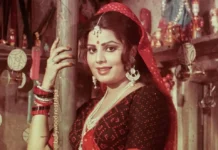
Meenakshi Seshadri — the graceful star of many 80s–90s hits — recently spoke frankly about the casting-couch culture she encountered early in her career. In a calm, unhurried tone, she recalled moments that were uncomfortable and the kind of off-camera pressure that sometimes came wrapped in polite invitations like, “Why don’t you come to my room?” Her memory of that line was not shouted for shock value; she mentioned it as an example of how everyday professional interactions could suddenly become awkward and unsafe.
Experiences with the Casting Couch
Recalling an Uncomfortable Encounter
During the interview, Meenakshi Seshadri recalled a disturbing incident involving the casting couch. She mentioned, “I was once asked, ‘Why don’t you come to my room in the evening?'” She elaborated on how she handled such situations with dignity and composure.
Meenakshi’s Response to Inappropriate Advances
Meenakshi emphasized her respectful approach towards everyone, regardless of their behavior. She shared, “I genuinely like and respect anybody who is in front of my eyes. So, unki baatein aur behavior bhale se mujhe thik na lage, I will not judge them. Agar kisine samne se kaha ki ‘Arey, come on, hang out with me’ and ‘Why don’t you come to my room in the evening’ which can happen and which has happened my immediate response would be ki aap mere itne acche dost ban chuke ho ki I cannot indulge anything else. If he can continue to stay friends, fantastic. But that’s it, end of the matter. I did not discuss it after that, and nobody came back to me again.”
When asked about pay parity and how she felt about her co-stars being paid more than her, Meenakshi responded thoughtfully. She said, “The directors and producers saw that I was a very hardworking, very curious person who was really enjoying the whole process. So, I never ever felt ki apne male co-stars ke contrast me kuch treatment achchi nahi milrahi hai ya kam attention mil rahi hai. I’m sure they were paid much more than me, okay, but on the sets, mujhe hamesha aisa laga ki the directors had a soft corner for me.”
Acknowledging the gender imbalance in the industry, Meenakshi admitted that there were “too many males and hardly any females” in the field. Despite this, she expressed that she had an enjoyable experience. “I had a great time. I never felt alienated, diminished, or alienated in any way,” she concluded.
Collaboration and Respect on Set
Meenakshi highlighted the respect and involvement she received from directors, stating that they would often seek her opinion on dialogues and camera placements. She added, “Toh meri kuch alag equation thi which is I put it totally to my just my passion for fine arts and you know learning. Shots ke beech me bhi, I wouldn’t go to the makeup room. I would sit on the sets even if it was hot; that was my work ethic.”
What exactly did she say — and why it matters?
Meenakshi’s account was measured, not melodramatic. She described situations where the power balance — a young actor versus a producer or director — could quickly change the atmosphere of an audition or meeting. She emphasized that these were often not violent or dramatic scenes but small, troubling asks that left newcomers feeling exposed and alone. The importance here is not just the detail of one incident, but the pattern: many actors saw similar moments and felt pressured to stay quiet to protect their careers.
Why so many stayed silent for so long?
One of the most human parts of Meenakshi’s telling was her explanation of silence. Speaking up often meant risking future work, reputation, and personal safety — and for many, that felt like too high a price. Actors depended on a small circle of decision-makers for roles; upsetting that circle could mean being blacklisted. Meenakshi pointed out that survival in the industry sometimes required pragmatic choices, even if they felt morally hard. That honesty helps explain why stories like hers — though painful — are powerful when finally shared.
How she handled it — calm courage, not theatrics?
Instead of dramatic accusations, Meenakshi spoke about standing up quietly in the ways she could: saying no, refusing closed-door meetings, and relying on trusted colleagues. She underlined that protecting one’s dignity often shows up in small acts — walking away from a casting that felt wrong, insisting on an audition in public spaces, or having a manager/relative present during meetings. Her message to younger actors was practical: trust your instincts, set boundaries, and find allies rather than face uncomfortable situations alone.
What she wants to change in the industry?
Meenakshi didn’t call for vengeance; she asked for systems that make abuse harder to hide. She talked about clearer audition procedures (no private, after-hours “meetings”), formal reporting channels, and mentoring that protects newcomers. She also suggested that older, respected figures in the industry can do more to create safe norms — not by policing every interaction but by making transparent processes the default. This is a reform-focused approach: fix the rules so uncomfortable choices aren’t the only option for those who want to work.
Why her voice matters now?
Meenakshi’s recollection carries weight because she represents a generation that rose to fame when conversations about harassment were uncommon. When veterans speak plainly, it lowers the bar for younger people to share, without the burden of seeking sensational headlines. Her calm, solution-oriented tone helps shift the conversation from blame to prevention — and that can be more useful for long-term change. It also humanizes the problem: it’s not only lurid anecdotes but countless small moments that add up to an unsafe culture.
What the industry (and audiences) can do next?
Change needs both individual and structural action. On a personal level, established actors, directors, and producers can mentor newcomers and insist on fair audition practices. Structurally, production houses and unions should adopt clear codes of conduct, independent complaint mechanisms, and transparent audition protocols. Audiences can also play a role by supporting survivors who speak up and not glamorizing power imbalances. Meenakshi’s ask was simple: make the path safer for new talent so they don’t have to choose between dignity and a break.
Final thought — honesty over sensationalism
Meenakshi Seshadri’s interview stands out because it’s honest without being sensational. She didn’t name and shame on a public stage; she named a system and shared practical ideas to change it. For many readers, that tone will feel familiar and Indian in its plainness — a calm voice asking for fairness, safety, and dignity for the next generation of actors. If more people in the industry listen, small policy shifts and collective courage can make a big difference.
Discover more from RitzyTimes
Subscribe to get the latest posts sent to your email.













![Hero Glamour X [Under ₹1 Lakh]](https://www.ritzytimes.com/wp-content/uploads/Hero-Glamour-X-2025-100x70.webp "Hero Glamour X [Under ₹1 Lakh]: Techy & Trendy")
